Israel's enemies are people inland. Neither the Egyptians nor the Jordanians or the Syrians or, of course, Palestinians are conspicuous by their seafaring skills, so that the Israeli Admiralty felt that what the Navy needed at First National were light and agile ships that could attack targets both on the coast and at sea. Ships launchers, then.
By then, Israel lacked the necessary technology and shipyards to build them, so that the charge in the city of Bremen. The Germans treated the application and advised them about the latest torpedo boats which, interestingly, were based on the Schnellboot with the Nazi Navy had sunk dozens of merchant ships during World War allies.
Leaving aside historical grudges, Germans and Israelis held hands and closed the deal. But it happened that when the purchase was announced publicly, the Arab League raised a bitter protest against the Government in Bonn. Adenauer, who was already at the end of his last term, he would not fuss or leave to his successor, Ludwig Erhard, such a hot potato in their hands, so I canceled the construction contract, but not the design of the boats, already Israeli Navy property.
The Hebrews did not shrink from the difficulties and contacted a shipyard in Cherbourg (France), who undertook to build ships on the plans German. The Arab League came to protest, but to Paris brought him carelessly.
were built boats and traveled to military personnel from Israel, to be familiar with those and practiced in French waters.
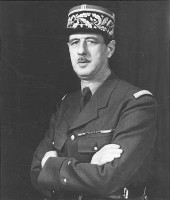 Then something happened that neither the Israelis nor the French had. The Six Day War, with the brilliant Jewish victory over its Arab enemies. Paris left to see the Israelis as a young idealists, especially after the lightning operation that special forces conducted against Liberation Organization (PLO) in Beirut airport. De Gaulle believed that Lebanon, though independent, was still a wholly owned fiefdom and did not like the Jews uncontrollable paseasen there doing what they felt like it without even asking permission.
General in 1968 declared an arms embargo against Israel. The five already built missile boats were confiscated and they were stopping at the port of Cherbourg. The situation worsened for weeks. De Gaulle did not want to budge, despite diplomatic efforts, while in Egypt Nasser presented the new torpedo that had just bought from the Soviet Union. The Israeli troops had gained ground and air could spoil in the sea if the government did not recover the hijacked boats in Cherbourg. After considering several possibilities, the then Prime Minister Golda Meir, had ordered the rescue, but not by force, which would be a suicide, but by deception.
The architect of the operation was the Admiral Mordechai Limon, nicknamed by the sailors Mokka. The plan was to convince the French that they were withdrawing and that it was best to sell the boats to a private company. If biting the bait, the same company responsible for and lead them out of Cherbourg to the port of Haifa.
On paper, it seemed very simple, the problem was that this might not be measured with comprehensive inept as Egyptian and Syrian military, but with the French intelligence ... and in France itself. Mokka
moved to France and there, in view of all pretended that carried out tough negotiations with a Norwegian company called Starboat to bring the material. The company, set up by the Mossad, was recorded in fact in the register of Oslo, and allegedly engaged in oil exploration in the North Sea. Nothing suspicious. A missile launch and adapted desartillada can be used for oil exploration.
 finished the first deception, the sale was auctioned in Paris with the permission of the Minister of Defence. Starboat put the boat under the Panamanian flag and began to remove them, one by one, to make small trips around the North Sea. The idea was to convince the French authorities, but had not yet adapted Starboat boats, was testing the material at sea to understand the possibilities it offered.
There was the hard part: removing the boats from Cherbourg and bring them to Israel without the French warned. Perhaps out was relatively easy, but to reach the Israeli coast had to travel 5,800 miles across the Atlantic and Mediterranean no other ports of call to the Gibraltar and Malta, controlled by the British ... that would turn a blind eye, if only for to annoy the French. In those two points would have to refuel cargo ships converted into tankers, which would have to navigate as the first, not second, exposing himself to the operation was adrift for a simple and untimely inspection.
The order came from the evening of December 24, 1969 at two o'clock. In the middle of Christmas Eve, the Gauls intelligence services would be minimum. The fleet would gain valuable time, he would use to move away from the coast and near as possible to Gibraltar. And so it happened: the French did not realize that the boats had gone up to twelve hours after, and not because the key players in Cherbourg, but because he gave the BBC news in two in the afternoon.
Defense Minister, Michel Debré, was furious and ordered an air strike on the Israeli fleet. The chief of staff flatly refused and put his resignation to the Elysee. Norwegian ship was flying the Panamanian flag and Israeli civilian crew sailing in international waters. Attack would be to trample the most basic norms of international law and also an unaffordable slaughter of civilians at sea. Prime Minister Jacques Chaban-Delmas, revoked the order with great reluctance and began to find the culprit of the mess. He kept far away from his office, called Mokka Limon and lived in Paris as military attache at the Israeli embassy. Made the necessary checks, the government ordered his immediate deportation to be persona non grata for the Republic. When the next day, the press asked why Chaban-Delmas was deported to the Jewish military, merely replied sarcastically: "I do not like tea with lemon and mocha coffee."
The fleet refueled in Gibraltar and near the Italian island of Lampedusa. After a week of sailing, arrived at the port of Haifa on 31 December, amid cheers from the crowd on the docks. The five ships were named Storm, Volcano , Sword, Spear and Arrow, and went into action to join the Israeli Army.
The project called Cherbourg scored more than a slight rise in the Jewish national pride. Marked the end of military relations between France and Israel, very smooth so far, and the start of the US-Israel alliance. Since that time, Washington was erected preferred partner Jerusalem armaments. And it still is. All because of an embargo and five boats, with large doses of wit and courage, the Israelis took from France in their noses.
Source: libertaddigital.com


0 comments:
Post a Comment